Introduction
The increasing demand for smart devices and their applications has led to the growth of the Internet of Things (IoT) industry. IoT devices generate vast amounts of data, which needs to be monitored and analyzed in real-time to ensure efficient operation. This is where an IoT dashboard for real-time monitoring comes into play. A well-designed IoT dashboard provides a centralized platform for monitoring and controlling IoT devices, enabling users to make data-driven decisions. In this blog post, we will explore the importance of an IoT dashboard for real-time monitoring and provide step-by-step instructions on how to create one.
IoT devices are used in various industries, including healthcare, manufacturing, transportation, and energy management. These devices collect data on temperature, humidity, pressure, and other parameters, which is then transmitted to the cloud or a local server for analysis. An IoT dashboard for real-time monitoring enables users to visualize this data in real-time, identify trends and patterns, and take corrective actions to optimize performance. With the increasing number of IoT devices, the need for a robust and scalable IoT dashboard has become essential.
Before we dive into the step-by-step instructions, it’s essential to understand the key features of an IoT dashboard for real-time monitoring. These features include real-time data visualization, customizable dashboards, alert systems, and integration with various data sources. A good IoT dashboard should also be user-friendly, scalable, and secure to ensure that users can access the data from anywhere and at any time.
Step-by-Step Instructions
To create an IoT dashboard for real-time monitoring, follow these step-by-step instructions. First, choose a suitable platform or tool that supports IoT device integration and real-time data visualization. Some popular options include ThingSpeak, Plotly, and Tableau. Next, connect your IoT devices to the chosen platform, ensuring that the devices are configured to transmit data in real-time. This may involve setting up APIs, modifying device firmware, or using a gateway to connect devices to the cloud.
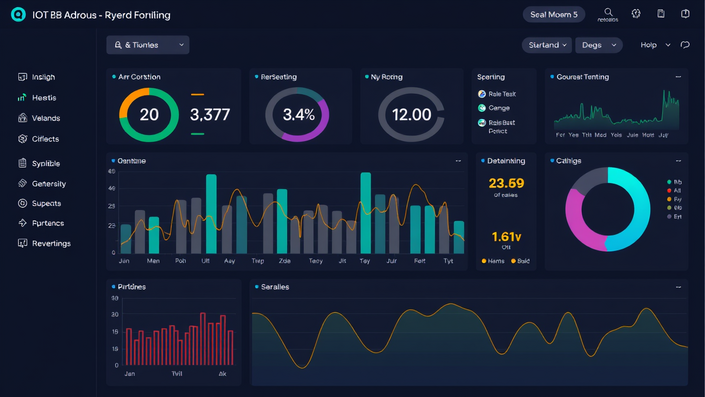
Once the devices are connected, create a dashboard that visualizes the real-time data. This can include charts, graphs, gauges, and other visualization tools to represent the data. Customize the dashboard to meet your specific needs, adding features such as alerts, notifications, and drill-down capabilities. An IoT dashboard for real-time monitoring should also include features such as data filtering, sorting, and aggregation to enable users to analyze the data effectively.
Another crucial step is to integrate the IoT dashboard with other systems and tools, such as CRM, ERP, or SCADA systems. This enables users to access additional data and perform actions based on the insights gained from the IoT dashboard. For example, an IoT dashboard for real-time monitoring in a manufacturing plant can be integrated with the production planning system to optimize production schedules and resource allocation.
In addition to these technical steps, it’s essential to consider the security and scalability of the IoT dashboard. Ensure that the dashboard is built using secure protocols and encryption methods to protect user data and prevent unauthorized access. The dashboard should also be scalable to accommodate increasing amounts of data and user traffic, without compromising performance or responsiveness. By following these step-by-step instructions and considering the key features and best practices, you can create an effective IoT dashboard for real-time monitoring that meets your specific needs.
Real-time monitoring is critical in various industries, including healthcare, where IoT devices are used to monitor patient health and track medical equipment. An IoT dashboard for real-time monitoring in healthcare enables medical professionals to respond quickly to changes in patient condition, improving patient outcomes and reducing treatment costs. In the transportation industry, an IoT dashboard for real-time monitoring can be used to track vehicle location, speed, and fuel consumption, optimizing routes and reducing fuel costs.
The benefits of an IoT dashboard for real-time monitoring are numerous, including improved operational efficiency, enhanced decision-making, and increased productivity. By providing real-time insights into IoT device data, these dashboards enable users to identify areas of improvement, optimize performance, and reduce costs. Moreover, an IoT dashboard for real-time monitoring can be used to predict maintenance needs, reducing downtime and extending the lifespan of IoT devices.
As the IoT industry continues to grow, the demand for effective IoT dashboards for real-time monitoring will increase. These dashboards will play a critical role in enabling businesses and organizations to harness the power of IoT data, driving innovation and competitiveness in various industries. By understanding the key features and best practices for creating an IoT dashboard, developers and users can unlock the full potential of IoT devices and achieve their goals more efficiently.
To get the most out of an IoT dashboard for real-time monitoring, it’s essential to choose the right tools and platforms. Consider the specific needs of your project, including the type of devices, data volume, and user requirements. Evaluate different options, such as open-source platforms, cloud-based services, or proprietary software, to find the best fit for your project. Additionally, consider the total cost of ownership, including development, maintenance, and support costs, to ensure that the chosen platform or tool meets your budget and resource constraints.
Conclusion
In conclusion, an IoT dashboard for real-time monitoring is a powerful tool for harnessing the power of IoT data. By providing real-time insights into device performance, these dashboards enable users to optimize operations, improve decision-making, and reduce costs. As the IoT industry continues to grow, the demand for effective IoT dashboards will increase, driving innovation and competitiveness in various industries. When creating an IoT dashboard for real-time monitoring, consider the key features, best practices, and technical requirements to ensure that the dashboard meets your specific needs and provides maximum value. By leveraging the capabilities of an IoT dashboard for real-time monitoring, you can unlock the full potential of your IoT devices and achieve your goals more efficiently.
The future of IoT dashboards for real-time monitoring is exciting, with emerging trends such as artificial intelligence, machine learning, and edge computing set to further enhance their capabilities. As IoT devices become more ubiquitous, the need for robust and scalable IoT dashboards will become even more critical. By investing in an IoT dashboard for real-time monitoring today, you can position your business or organization for success in the increasingly connected and data-driven world of tomorrow. Remember, a well-designed IoT dashboard for real-time monitoring is essential for unlocking the full potential of your IoT devices and achieving your goals more efficiently.