Planet Earth: The Complete Guide to Our Living World
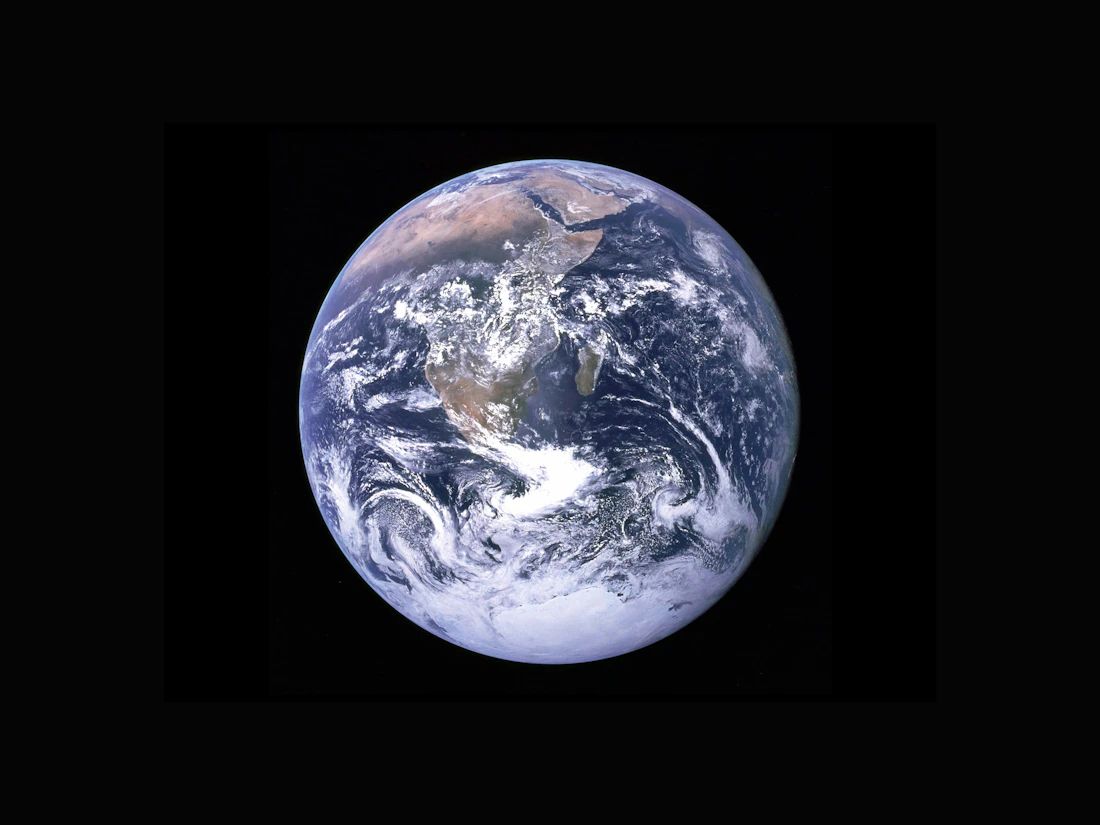
Earth does not introduce itself quietly. It announces itself in the roar of oceans, the slow grind of tectonic plates, the impossible green of a rainforest canopy, and the silence of a glacier that has existed for two million years. This is the only planet known to harbour life — and understanding it, in all its violent, tender complexity, may be the most important thing any human being can do.
Earth's Structure: Layers, Plates, and the Forces Below
Beneath the thin skin of soil and rock you walk on every day, Earth is layered like a vast, slow-burning machine. Understanding what lies below is not merely academic — it explains earthquakes, volcanoes, mountain ranges, and why the continents are still moving right now, at roughly the speed your fingernails grow.
The outermost layer, the crust, ranges from just 5 kilometres thick under the oceans to 70 kilometres thick under mountain ranges. Below it sits the mantle — a 2,900-kilometre-deep zone of semi-molten rock that flows on geological timescales, driving the movement of tectonic plates on the surface above.
ALWAYS MOVINGEarth's outer core is liquid iron and nickel, churning in currents that generate the planet's magnetic field — the invisible shield that deflects lethal solar radiation and makes complex life possible. At the very centre, the inner core is solid iron, compressed by immense pressure to temperatures exceeding 5,000°C, hotter than the surface of the Sun.
| Layer | Depth | Composition | State | Temperature |
|---|---|---|---|---|
| Crust (continental) | 0–70 km | Granite, basalt | Solid | ~200–400°C at base |
| Crust (oceanic) | 0–10 km | Basalt, gabbro | Solid | ~100–300°C at base |
| Mantle | 70–2,900 km | Silicate rock | Solid/plastic | 500–3,700°C |
| Outer Core | 2,900–5,150 km | Liquid iron-nickel | Liquid | 3,700–5,000°C |
| Inner Core | 5,150–6,371 km | Solid iron-nickel | Solid | ~5,000–6,000°C |
There are 15 major tectonic plates and dozens of minor ones constantly jostling across the mantle. Where they collide, mountain ranges rise. Where they pull apart, new ocean floor is born. Where one dives beneath another, earthquakes rupture and volcanoes erupt. The surface of Earth is not stable ground — it is an active, ongoing construction project 4.5 billion years in the making.
The Oceans: Earth's Climate Engine and Cradle of Life
The oceans cover 71% of Earth's surface and contain 97% of all the planet's water. They are not simply bodies of water — they are the primary engine of Earth's climate, the origin of all life, and the least-explored territory on the planet. We have better maps of the surface of Mars than of our own ocean floor.
| Ocean | Area (km²) | Average Depth | Deepest Point | Notable Feature |
|---|---|---|---|---|
| Pacific | 165,250,000 | 4,280 m | Mariana Trench (10,994 m) | Largest ocean on Earth |
| Atlantic | 106,460,000 | 3,332 m | Puerto Rico Trench (8,376 m) | Mid-Atlantic Ridge |
| Indian | 70,560,000 | 3,890 m | Java Trench (7,258 m) | Warmest ocean by average temp |
| Southern | 21,960,000 | 3,270 m | South Sandwich Trench (7,235 m) | Encircles Antarctica |
| Arctic | 14,090,000 | 1,205 m | Molloy Hole (5,550 m) | Smallest and shallowest ocean |
Ocean currents act as a global conveyor belt, redistributing heat from the tropics toward the poles. The Gulf Stream, for example, keeps Western Europe roughly 5–10°C warmer than it would otherwise be at the same latitude. Disrupt these currents — through melting ice altering salinity — and climates across entire continents shift dramatically.
The ocean also absorbs approximately 25% of all CO₂ produced by human activity each year, and generates more than 50% of the planet's oxygen through photosynthetic phytoplankton — microscopic organisms most people have never heard of, yet owe every second breath to.
Biodiversity: The Web of Life That Holds Everything Together
Life on Earth is not a collection of isolated species — it is a single, interlocked system in which the disappearance of one thread can unravel sections of the whole. From the bacteria in soil that make agriculture possible to the wolves that reshape river courses simply by changing where deer graze, biodiversity is the operating system this planet runs on.
For context on scale: scientists estimate there are between 8 and 10 million species on Earth. Only around 2 million have been formally named and described. The ocean alone may contain millions of undiscovered microbial species. Every year, researchers discover roughly 15,000 to 18,000 new species — and lose others before they are ever found.
8 MILLION SPECIESThe most biodiverse environments on Earth are tropical rainforests, coral reefs, and deep-ocean hydrothermal vents. The Amazon Basin alone contains roughly 10% of all species on Earth within an area covering less than 1% of the planet's surface. The Great Barrier Reef hosts over 1,500 species of fish, 4,000 types of mollusc, and 600 species of coral.
Extinction rates are currently estimated to be 100 to 1,000 times higher than the natural background rate, leading scientists to describe the current period as Earth's sixth mass extinction event. The previous five were caused by asteroid impacts, volcanic super-eruptions, and dramatic atmospheric shifts. This one is driven by a single species.
Earth's Atmosphere and Climate: The Thin Layer Everything Depends On
The atmosphere is a layer of gas roughly 100 kilometres thick — the boundary beyond which space begins. Proportionally, it is thinner relative to Earth's diameter than the skin on an apple. Yet it is entirely responsible for blocking lethal radiation, maintaining temperatures in a range that allows liquid water, enabling weather, and making every breath you take possible.
The atmosphere is divided into five layers. The troposphere, where all weather occurs and where humans live, extends just 12 km above the surface. The stratosphere above it contains the ozone layer, which absorbs 97–99% of the Sun's ultraviolet radiation. Above that are the mesosphere, thermosphere, and exosphere — regions of increasingly thin gas merging imperceptibly into the vacuum of space.
100KM THINEarth's climate is a product of the atmosphere interacting with the oceans, land surfaces, ice sheets, and living organisms simultaneously. Carbon dioxide, methane, and water vapour trap heat radiating from the surface — the greenhouse effect — which has kept Earth warm enough for liquid water for billions of years. The challenge of the current era is that human activity has increased atmospheric CO₂ from a pre-industrial 280 parts per million to over 420 ppm today, altering a system that took millennia to stabilise.
Ice cores drilled from Antarctica and Greenland give us a 800,000-year record of Earth's atmospheric composition. They show that CO₂ levels today are higher than at any point in that entire record — and rising faster than at any previous transition between geological eras. The atmosphere is not broken. But it is being pushed into territory it has not occupied in human history.
7 Processes That Keep Planet Earth Alive
-
1The Water Cycle Solar energy evaporates surface water, which rises, condenses into clouds, falls as precipitation, and returns to oceans via rivers — distributing fresh water across all continents and regulating temperature along the way.
-
2Photosynthesis Plants, algae, and cyanobacteria convert sunlight and CO₂ into oxygen and glucose — the foundational energy transaction that underpins almost all food chains on Earth and has shaped the atmosphere for over 2.7 billion years.
-
3Plate Tectonics The slow movement of crustal plates recycles carbon from the atmosphere into rock and back again over millions of years, regulating long-term climate and renewing nutrient-rich land surfaces through volcanic activity.
-
4Ocean Circulation Thermohaline circulation — driven by differences in water temperature and salinity — transports heat, nutrients, and dissolved gases around the planet, stabilising regional climates and supporting marine food webs.
-
5The Carbon Cycle Carbon moves continuously between the atmosphere, oceans, soil, living organisms, and rock. This cycle regulates atmospheric CO₂ concentrations and therefore global temperature — it is the planet's primary long-term thermostat.
-
6The Magnetic Field Generated by the churning liquid iron of Earth's outer core, the geomagnetic field deflects solar wind and cosmic radiation that would otherwise strip away the atmosphere and sterilise the surface — as happened to Mars when its core cooled.
-
7Decomposition Fungi, bacteria, and invertebrates break down dead organic matter, returning nutrients to soil and water. Without decomposers, dead material would accumulate indefinitely, nutrients would be locked away, and ecosystems would collapse within decades.
Frequently Asked Questions About Planet Earth
These are the questions scientists, students, and curious minds ask most often about the planet we call home. Answered plainly.