Your Complete Guide to Culture, Art and Design: Everything You Need to Know Before You Create
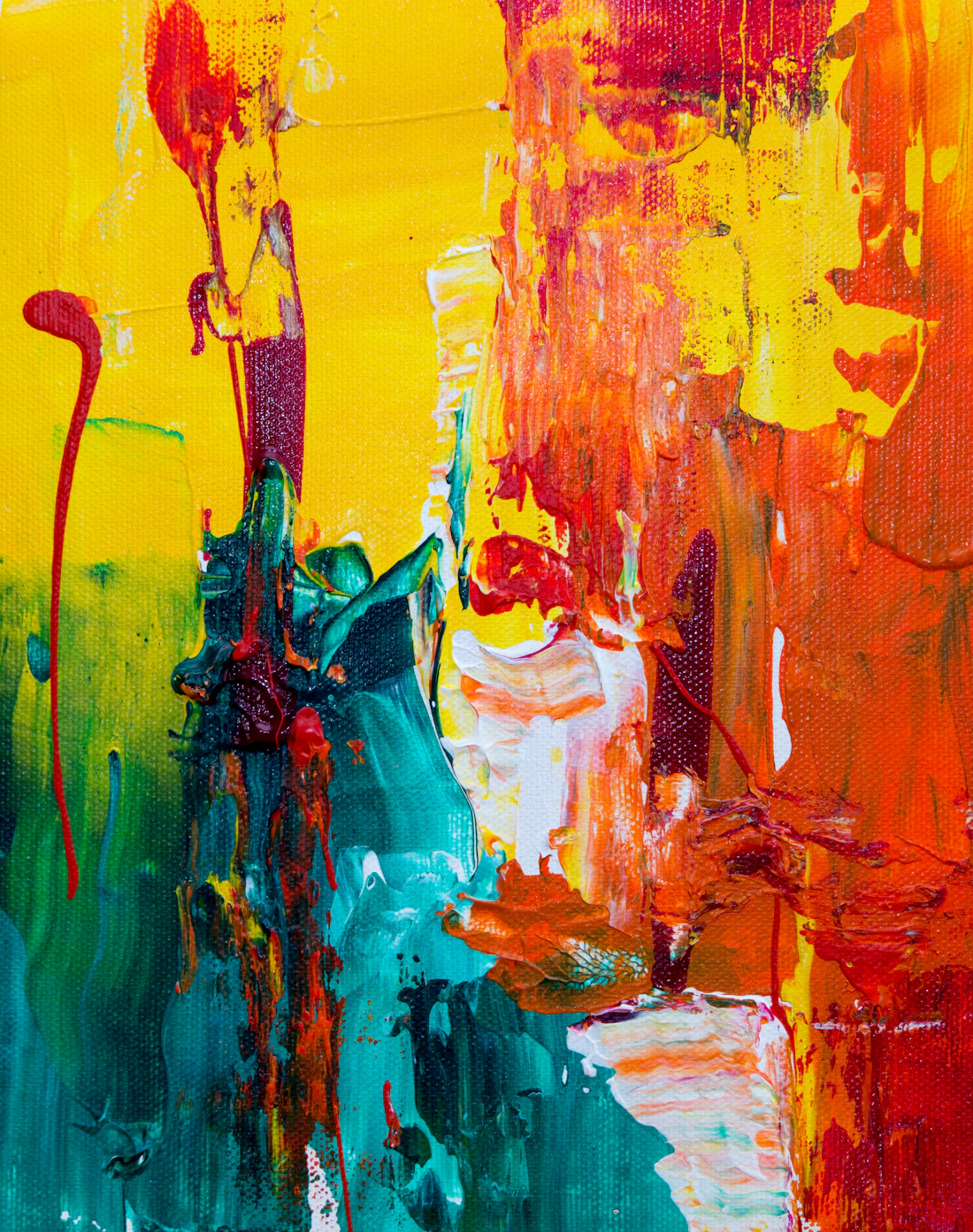
Culture does not wait for you to catch up. From the moment you step inside a gallery, open a design brief, or pick up a pencil — you are already inside something ancient and alive. This guide gives you everything: the movements that shaped visual history, the real cost of a creative life, the cities that make art happen, and the path from curious observer to practicing maker.
Art Movements, Visual History, and What You Actually Need to Know
Before you walk into a gallery and pretend to understand what is on the walls, it helps to have a map. Art history is not a list of dead names and dates — it is a series of arguments, each movement a reaction to the one before it, each style a protest or a love letter or a breakdown.
The story runs roughly like this: Impressionism (1860s–1880s) broke from academic realism to capture light and feeling over precision. Modernism shattered representation entirely. Bauhaus (1919–1933) fused fine art with industrial design, producing a visual language that still runs through every piece of software UI you use today. Then came Abstract Expressionism, Pop Art, Minimalism, Conceptual Art — and finally the collapse of all categories in the postmodern 1980s and 90s.
Contemporary art today does not belong to a single movement. It borrows freely from everything that came before — and increasingly from digital tools, machine learning, and global non-Western traditions that Western art history spent a century ignoring. Understanding even the broad outlines makes everything else — museum visits, design choices, brand aesthetics, film composition — click into place.
KNOW THE ROOTS| Movement | Era | Key Idea | Defining Artists | Design Influence Today |
|---|---|---|---|---|
| Impressionism | 1860s–1880s | Light, sensation, the moment | Monet, Renoir, Degas | Soft gradients, atmospheric photography |
| Bauhaus | 1919–1933 | Form follows function | Klee, Kandinsky, Gropius | UI/UX grids, sans-serif typography |
| Abstract Expressionism | 1940s–1950s | Emotion over representation | Pollock, Rothko, de Kooning | Brand texture, expressive illustration |
| Pop Art | 1960s | Mass culture as fine art | Warhol, Lichtenstein, Hockney | Bold flat color, ironic imagery |
| Minimalism | 1960s–1970s | Strip away everything | Judd, LeWitt, Flavin | Apple aesthetics, white space, Muji |
| Contemporary / Digital | 2000s–now | Everything, everywhere | Kaws, Banksy, Refik Anadol | Generative design, NFT art, motion graphics |
You do not need to memorize this. You need to feel it. Walk through a museum in chronological order just once and you will carry the whole arc in your body forever — a timeline that makes every design decision you see in the world suddenly legible.
The Real Cost of a Creative Life: Budgeting for Art and Design
The myth that art requires poverty is exactly that — a myth. But the opposite fantasy, that creativity is free, ignores real costs. Materials, software, education, studio time, and the most expensive cost of all — your attention — all have prices. Here is what a realistic creative budget actually looks like.
| Category | Beginner ($) | Intermediate ($) | Professional ($) |
|---|---|---|---|
| Digital tools/year | $0 (Canva free, GIMP) | $600 (Adobe CC) | $1,200+ (Adobe CC + Figma + extras) |
| Traditional materials/year | $30–80 (basic sketchbook, paints) | $200–500 (quality supplies) | $800–3,000 (professional grade) |
| Education | $0 (YouTube, Coursera free) | $500–2,000 (online courses) | $10,000–40,000/yr (MFA programs) |
| Studio/workspace | $0 (home setup) | $100–400/mo (co-working studio) | $600–2,000/mo (private studio) |
| Portfolio & exhibition | $0 (Behance, Instagram) | $100–300 (personal website, prints) | $500–5,000 (gallery shows, printed books) |
| Annual total estimate | $30–150 | $2,000–5,000 | $15,000–50,000+ |
The most important insight in creative budgeting is sequencing. Free tools used with deep focus produce better work than expensive tools used carelessly. Master one software suite before adding another. Fill five sketchbooks before upgrading your brushes. The investment that consistently pays the highest return is time with the work itself — not the gear surrounding it.
For designers entering the job market, a strong portfolio hosted on Behance, a personal site, and an active presence on relevant platforms is more valuable than any single credential. Clients and employers look for evidence of taste and judgment — not just technical execution. Show your thinking, not just your output.
The World's Greatest Art Cities — and How to Choose Where to Go
Cities accumulate culture the way rivers accumulate silt — slowly, from a hundred upstream sources, building something dense and particular. The best art cities in the world are not interchangeable. Each one has a specific texture, a dominant aesthetic, and a way of organizing creative life that you absorb just by being there.
For art history and classical collections, Paris, Florence, and Vienna are unmatched. The Louvre, the Uffizi, and the Kunsthistorisches Museum hold more masterworks per square meter than anywhere else on earth. A week in Florence alone will recalibrate your visual sense permanently.
GO TO FLORENCEFor contemporary art and design, look to New York, Berlin, Tokyo, and São Paulo. New York's Chelsea gallery district and MoMA define the global contemporary conversation. Berlin is looser, cheaper, and more experimental — the city where movements incubate before going mainstream. Tokyo operates on its own aesthetic logic entirely, blending precision craft with pop culture in ways that continually surprise Western designers.
For design and architecture specifically, Amsterdam, Copenhagen, and Helsinki have produced design cultures of extraordinary depth — characterized by functionality, material honesty, and quiet restraint that has influenced everything from furniture to app interfaces to public transit systems.
Design Disciplines: Finding Your Creative Path
Design is not one field. It is a family of disciplines that share a common concern — the shaping of human experience through form — but diverge radically in their tools, methods, and outputs. Choosing where to focus is one of the most important decisions a creative person makes, and it is rarely made consciously enough.
The major design disciplines and what drives them:
- Graphic Design — Visual communication through typography, image, and layout; the broadest and most foundational discipline
- UX / Product Design — Designing the logic and feel of digital products; the most in-demand and highest-paid design role globally
- Industrial / Product Design — Shaping physical objects, from furniture to consumer electronics to medical devices
- Architecture & Interior Design — Designing the spaces people inhabit; the longest education path, the most lasting impact
- Fashion Design — Clothing as cultural expression; intensely trend-sensitive and commercially complex
- Motion & Interaction Design — Time-based design for screen and installation; the fastest-growing frontier in creative practice
The healthiest creative careers are usually built at the intersection of two disciplines. A graphic designer who understands UX principles. An architect fluent in data visualization. A fine artist who can write compellingly about their practice. Singular depth in one area gives you authority; cross-disciplinary range gives you originality. Both matter more than any single credential.
Do not rush this decision. Most designers spend their twenties sampling widely before settling into a focus that is genuinely theirs rather than inherited from a school program or job offer. Deliberate exploration early makes for a more rooted practice later.
How to Build Your Creative Practice in 7 Steps
-
1Consume voraciously before you produce Spend 30 days doing nothing but looking — museums, books, films, street art, design websites. Fill your visual memory before you try to add to it.
-
2Start a daily sketchbook or visual journal Five minutes a day of drawing, collaging, or writing about what you saw. Consistency over quality. The habit is the foundation.
-
3Learn one tool deeply Whether it is Procreate, Figma, Photoshop, or a pencil — become genuinely fluent in one before spreading across many. Mastery of a tool unlocks creative thinking.
-
4Copy the masters deliberately Recreating works you admire is not plagiarism — it is the oldest form of art education. Copy Matisse's color. Copy Dieter Rams' proportions. Copy until you understand the decisions.
-
5Build a portfolio of personal projects Client work shows you can execute briefs. Personal projects show you have a point of view. You need both, and personal work is often what gets you hired.
-
6Find your creative community Join local life-drawing groups, design meetups, open studio events, or online communities. Feedback from peers accelerates growth faster than solo practice alone.
-
7Document and share your process Posting work-in-progress online builds an audience, forces articulation of your thinking, and creates a record of your development that becomes its own creative asset over time.
Frequently Asked Questions About Culture, Art and Design
These are the questions every aspiring creative asks — whether they are eighteen and choosing a path, or thirty-five and considering a pivot. Answered plainly.